I am going to discuss a new term –value trading in this post. It is a very interesting concept and it was first mentioned by my good friend – arpit ranka. I cannot claim any originality on this concept, but once it was mentioned by arpit, I started thinking about it and found a lot of validity and relevance to my style of investing.
What is value trading? (my definition)
Value trading is best described as buying a stock with the expectation of selling the same (hopefully with a gain) in a short period of time based on the realization of a single or multiple triggers. This trigger can be fundamental in nature such as normalization of sales/ profit margins (from a temporary low), business event such as launch of a new product or new capacity or change in the business environment for the better such as moving from extreme to moderate pessimism .
In addition to the fundamental issues, the trigger could be technical in nature such as short term overselling of a stock due to unexpectedly poor results or some temporary event such as elections which do not really impact the fundamentals of the business
In all these cases, one is expecting that the trigger will occur in the short term and the stock price will get a quick bounce (10%+) and one would be able to exit with a nice little profit
How does it differ from value investing
The above definition may sound a lot like value investing and I have been guilty of mixing the two for all these years. However as I think back, I have come to realize that they are not strictly the same and confusing the two can actually be harmful (as I will explain later in the post)
If one invests with a long term horizon in mind, then it is critical to have a good idea of the intrinsic value of the company. In addition this intrinsic value should increase over time, if one is to make above average returns in the long run.
So in effect, one is playing a short term trigger in the case of value trading versus betting on the business in the case of value investing.
Examples of value trading
Lets look at some example I have posted in the past and look at which bucket these ideas fall into
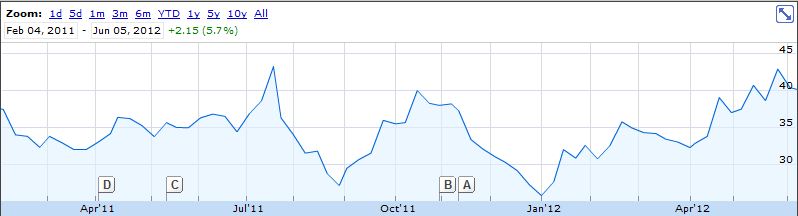
I would call this ideas as a value trading idea as this company is in a highly cyclical industry. At the time of buying the stock, I was expecting that the downturn in the capital goods industry would not be deep and the fundamentals of the company and its stock price would soon bounce back.
The trigger has yet to happen and as result the stock has slid further since the time I wrote about it.
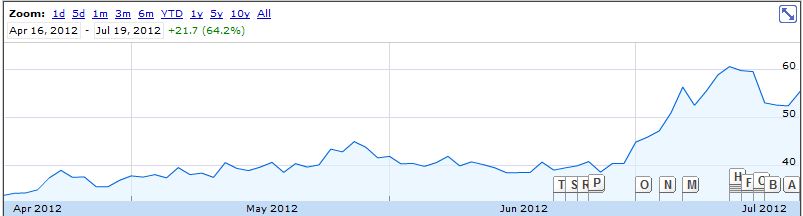
I started looking closely at this company in mid 2008 and by the end of the year the bottom had fallen out of the commercial vehicle market (the company stopped production for a month in dec 2008 to reduce the inventory). I purchased the stock in early 2009 at highly depressed prices.
The trigger – normalization of commercial vehicle sales happened quite quickly towards the end of 2009 and the stock turned out to be a four bagger.
In both cases, I expected a normalization of the fundamental performance and a bounce back in the stock price. In one case it happened faster than expected resulting in a large gain and in the other case the downturn has been deeper than expected and hence the stock price continues to languish
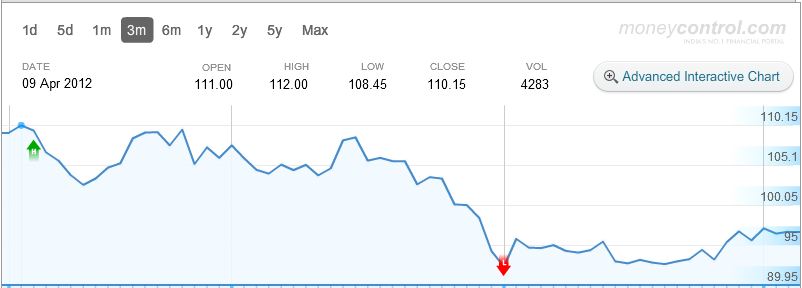
The company is a no.2 player in the battery industry and operates in a close duopoly. The key insight in this idea is that the company is expanding its competitive advantage (brand and distribution) and also benefiting from migration of demand from the un-organized to organized sector
I would tag this as a value investing idea as i don’t expect a specific trigger other than the fact that the company is improving its competitive position and hence should see an improvement in profitability and growth.
The first two examples I have discussed should bring out the following key point – In a value trading idea, the intrinsic value may not expanding or could be declining too. However the stock is undervalued and a set of triggers could close the gap with the intrinsic value. You can call this mode of investing as deep value investing or graham style investing too.
The last example of amara raja is more of a buffett style, high quality stock where although one is expecting the gap with the intrinsic value to close, the bigger gains come from an increase in the value of the company itself.
The differentiating factors
The two modes of investing differ on several factors. The first factor is time – Time works against you in the case of value trading. If the trigger happens quickly, the price rises quickly to the fair value and one can exit with a nice little profit. On the other hand if trigger gets delayed, then the overall returns may remain the same, but the annualized return is much lower.
In case of value investing, time works in your favor. As the company continues to grow its intrinsic value, the stock price should hopefully follow it (some times in spurts) and thus the idea becomes a buy and hold kind of idea.
The second factor where these two approaches differ is the nature of the business. The value trading approach works better in commodity and cyclical industries. If one can catch the bottom of the cycle and bet on a tier 2 or tier 3 company in the sector, then the gains are very high when the cycle swings back to a normalized level. At the same time, one needs to also ensure that the stock is sold once the cycle has turned .
Value investing approach works where the economics of the business is good and the company has a competitive advantage. In such cases, if one buys the stock at reasonable valuations, then returns are good over a long period of time
Do not mix the drinks !
I would say that value investing or long term investing should occupy a larger portion of the portfolio. If however you have the time and energy to look for value trading kind of ideas and can play them well, the portfolio can get an extra boost from time to time
The danger is really from mixing the two approaches as I have done in the past. I have bought trading kind of ideas and held on to it for a long time (assuming it was a long term investment). In such the cases the absolute returns came through, though the annualized returns were mediocre due to a delay in the key triggers.
The correct approach would be to keep in mind the nature of the idea (trading v/s investing), identify the triggers and the time it would take for the same to play out. If the triggers change or get delayed , then one should exit a value trading kind of idea. In contrast in a value investing idea, time is working in your favor and temporary hiccups are sometimes a good time to add to the position. In all such cases, one should just sit tight with the position.