Latest stories

A speculative bet

A
An investment operation is one which, upon thorough analysis, promises safety of principal and an adequate return. Operations not meeting these requirements are speculative – Benjamin graham, father of modern security analysis and value investing.
Some background
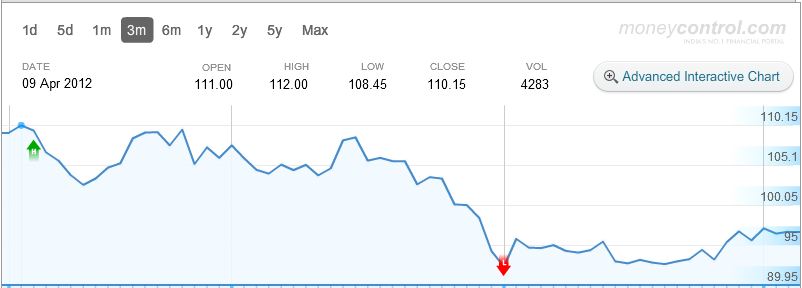
I had written about globus spirits earlier – read here. The stock price has since dropped by around 10% versus the index,  which has  essentially been flat during this period.

So what happened during this period ? Well, the company declared the Q4 results and the market reacted negatively to the drop in operating margins from around 16.8% to around 13%. The company closed the year with a 40% growth in topline and a measly growth of 2.5% in net profits.
This drop in net margins was mainly due to an expansion in the capacity to 84Mn litres and additional new capacity of 40 Mn litres which should come online in the middle of next year. This additional capacity has caused an increase in manufacturing expenses (initial startup costs) and higher interest expenses (due to higher debt to add the capacity). These costs in combination have depressed the operating margins.
So what is my bet ?
I think that the drop in the operating margins is temporary due to the new capacity which is being added in the current and next year. As the new plant stabilizes, the extra costs should reduce and with the extra topline , we should see an  improvement in the margins.
In addition, a decent portion of the additional capacity has been booked by USL for the franchise IMFL bottling (outsourced production)  which should help in boosting the bottom line. The management is targeting a 15% operating margin for the next year.
The management has also indicated that they would be able to grow the topline by 20% or more in 2013 (which appears doable based on past results). If we put all of this together, the company should be able to increase the operating profits from around 73 crs to 100 Crs, with net profits in excess of 55 crs in 2013 (interest costs should also reduce due to a planned reduction in debt)
The company is current selling for around 5 times the current year’s depressed earnings of around 40 crs. The company is thus selling at historically low valuation too (past valuations have generally been in excess of 7-8 times earnings).
In addition, all the other companies in the sector sell for 10+ times earnings, inspite of having much lower ROE and higher debts.
So why is it speculative?
Have I built a good case that the company is really undervalued – from absolute, historical and comparative valuation perspective?  I think I have done that.  At the same time I am still calling it speculative …why is that ?
Please look at the definition in the beginning of the post – An investment operation is one which, upon thorough analysis, promises safety of principal and an adequate return.
The key word in the above definition for our example is promise.  I am not confident about the above analysis and think it is a 50-50 proposition. I am still concerned that the industry has extremely poor economics and it is generally quite difficult for a single company to buck the trend of an entire industry.
Speculation is subjective
The key point is that  a stock can be both a  speculation or an investment at the same time and that depends on the investor himself. If you know what you are doing, then it is an investment, otherwise it is a speculation.
The danger is not speculating, but in confusing a speculation as an investment and betting heavily on it.
I am personally not very sure if the above thesis will play out and hence have committed a very small amount of money to it. In effect, this position is just to scratch an itch and not meaningful. If it turns out well, I will brag about it on the blog, otherwise you will not hear a peep on it 🙂

Stocks discussed in this post are for educational purpose only and not recommendations to buy or sell. Please read disclaimer towards the end of blog.

The return of the stock picker

T
The period from 2008 to 2012 has been a nightmare, right? How could it not be?
The market went from 20500 to around 17000 levels. That’s a loss of 18% in nominal terms, and if one considers an inflation of around 8%, then the loss is a mind numbing 42%. So if one had complete foresight and could see the future, then 100000 invested in a bank deposit would be worth 144000 versus around 82000 in the stock market.
So where is the debate in this?
The time of the stock picker
I know of several fellow investors who have actually done quite well during this period. They may have lost money on a few ideas here and there and suffered through temporary drops during the market swoons in 2008-2009. However over the course of these 4+ years, most of these investors have soundly beaten the market and delivered double digit annual returns
So how have these guys achieved this feat ? Do they have a special diet or drink something special 🙂 ? I don’t think so as far as I know
What has enabled these returns
I would say that there two reasons for the above result. All these investors who have done well, have a long term view of investing and don’t invest with one week or one month in mind. In most cases, they invest after a thorough analysis of the underlying business and only when the market undervalues the business.
A disregard for short term performance, usually results in a long term outperformance.
The second reason I would say is that all these investors are focused and work hard at finding good ideas and then purchasing the stocks, inspite of all the negative news around them.
It helps to be emotionally stable as far as the stock market is concerned. One need not be like Mr Spock from star-trek, but as long as you can avoid extreme greed or fear, you will do fine.
Hard work and focus
This is one of the most under-rated factors in being a successful investor. I am pretty sure most of us were told as young kids, that the way one can be successful in life is by working hard and being diligent about it.
This simple lesson which we apply to almost every other walk of life, is conveniently forgotten by a lot of people, once they enter the stock market. It almost as if, investors collectively expect a Santa Claus to give us returns just for putting up some money in the stock market.
I cannot think of any successful investor who has succeeded without a lot of effort and focus.
Enjoying the process
At the same time effort and focus is not enough to succeed in the long run, if you do not enjoy the process of investing. There are long periods of time when you will not make a meaningful return and all the effort would be seem to be in vain.
I personally went through this phase quite early in my life as an investor. The period 2000-2003 was one mind numbing and grinding bear market when the index went from 6000 levels to 3000 levels over a period of three years. It was no different from what we are experiencing now. Companies like L&T, concor, BHEL sold at 5 times earnings.
The only reason I was able to keep learning and keep going was due my passion for investing. A single digit return on a few lac of rupees is not even minimum wage …why else would any sane person keep working hard for less than minimum wage 🙂
Everyone can do it
The secret to being a successful investor is that there is no secret at all. Inspite of the nonsense propagated by media, that the common man should leave investing to professionals, I think anyone can become a good investor.
The most important factor to be a good investor is to really enjoy the process of investing. If one loves the process, he or she will find the means to continuously learn and improve as an investor.  The returns usually come in time, if one is patient.
The return of the stock pickers
The period 2003-2008 was a big tidal wave. All one had to do was to point his or her boat in the right direction (real estate or infrastructure ?) and the wave carried you through.
The  investors who have done well in the past few years are most likely the ones who enjoy the process (and ofcourse want to make money too) and are continuously learning and getting better at it. The last 4+ years have been a time of stock picking and hard work. If you looked for good ideas and operated with an independent mind, the results have been quite good.
Let me make prediction – I am close to 100% sure on this. Once the next bull run starts (it looks unlikely , but will happen in time), you will find a lot of new investors who will boast of their investing prowess and will think that making money in the stock market is easy and effortless.

Moat or no Moat – Indian IT

M
I recently posted the following comment on twitter
Indian IT still earns 30%+ Roe vs. 15-20% for other IT majors. Cannot see any competitive advantage to justify such excess profits 4 long term
This initiated a discussion with prabhakar on twitter. Now, a 140 character space is sufficient to provoke a discussion, but very painful to explore any meaningful topic. So I decided to write a post and share some thoughts (and hopefully carry the discussion with prabhakar and others in the comments section)
I have written about the competitive advantage (moat) of Indian IT companies in detail here. I drew the following conclusion then,
The broad conclusion one can draw from the above analysis is that IT companies do enjoy a certain degree of competitive advantage. The source of this advantage is no longer the global delivery model (everyone does it) or the employees (all the companies source from the same pool). The key sources of competitive advantage can be summarized as follows
  • Switching cost due to customer relationships
  • Economies of scale
  • Small barriers due to specialized skills in specific verticals such as insurance, transportation etc
  • Management. This is a key source of competitive advantage in this industry and explains the wide variation of performance between various companies operating in the same sector with the same inputs and under similar conditions.
Let’s look at where we stand on these factors
a.    Switching costs – I personally think switching costs are coming down now. The nature of work is getting commoditized and as a result, companies are less reluctant to switch vendors. Sure, it is a pain to do so, but if the cost benefits are large then a lot of companies are ready to bite the bullet. In addition, the threat to switch to a different vendor is sufficient to drive down prices.
b.    Economies of scale – This is now turning from an advantage to a disadvantage for the larger firms as they continue to grow. A firm with 150000 employees (top IT vendors) will develop diseconomies of scale as it grows further
c.    Specialized skills – this was a weak advantage to begin with and in most cases these skills reside with individuals (who can leave easily) and are not really institutionalized (via a product offering)
d.    Management – It is important to have a good management, but a great management cannot change the competitive dynamics of a company completely.
Weak and strong moats
Let me introduce a new concept here – Weak and strong moats. A strong moat is one which cannot be breached easily by competition. Think about the moats enjoyed by titan industries (brand, distribution), Asian paints or Crisil – these are wide and strong moats which cannot be easily breached by competition.
A weak moat or weakening moat in contrast is a moat which is shrinking and can be breached much more easily by competition.
My hypothesis is this – Indian IT has a weak moat which is shrinking by the day.
Some numbers
Let’s look at the ROIC numbers for some IT companies (Indian and global)
IBM – 15-20 % (based on invested capital including debt)
Infosys – 50% (based on invested capital, excluding cash)
NIIT tech – 25%+ (based on invested capital, excluding cash)
The above numbers are not precise, but sufficient to paint a picture. The mid cap and foreign IT majors have an attractive ROIC (in excess of 15%) and are good businesses. The large cap Indian IT companies have phenomenal return on capital numbers, in comparison to their Indian and global counterparts.
What explains this big difference?
Eliminating some factors
I would like to argue against some points which are put forward to justify the presence of a competitive advantage for the IT majors
Talent – Everyone has access to the same talent (in India and abroad). You can easily pay 10-20% more and hire employees from competition, if you need to do that. So all this talk about differentiated talent and training ….is just talk and does not create any competitive advantage
Intellectual property – Some Indian companies focused on niche areas, do have IP and are able to charge more for it. At the same time, IP is not a sustainable competitive advantage and a company has to constantly invest, to build on it. In addition, if IP was such as source of sustainable advantage, then companies like IBM (which has more IP than a lot other vendors) would be earning a much higher return on their service business (they earn around 10% NPM)
Differentiated model, client engagement etc etc – This is all fluff and good for annual reports and client presentation.
The future
I will take a guess now (which is as good as yours). I think the return on capital  (margins and asset turns) will slowly drift downwards for the top IT companies as the commoditization increases without the presence of a sustainable competitive advantage.
This has already started and you can see it happening with several of the large cap IT companies. If I am even half correct, it is important to be careful in looking at valuations based on the past performance alone.

Evaluating the impact of rupee depreciation

E
The 22% drop in the rupee against the dollar is worrying to say the least. There are several ramifications for the Indian economy, if the slide continues.  Anything which impacts the economy, is bound to impact the stock market as a whole.
One can find a dizzying array of macro-economic analysis on the impact of the rupee depreciation and as many forecasts of the future levels of the exchange rate.
I personally consider macro-economic analysis too complex due to the huge number of variables involved in it and hence any analysis from my end is as good as yours. Instead I have been trying to evaluate how the rupee depreciation will impact my portfolio on an individual stocks basis.
I think there are three factors through which the fundamental performance  can get impacted
Factor 1: Level of Raw material / capital good import
What is the level of raw material / capital goods imported by the company?. If the company imports a substantial amount of raw material/ capital goods then it is likely to get impacted severely, if it cannot pass on the costs to the end user without impacting the volumes
Factor 2: Level of export
What is the level of export sales in the revenue of the company. A high level of export will benefit the company, if the company can maintain or improve its margins as a result of the rupee depreciation.
Factor 3: Level of foreign debt
What percentage of debt is ECB (external commercial borrowings) or FCCB? There are two key points to note here – What is the maturity schedule (payment timing) and the level of debt in comparison to equity / market cap?
The above three factors cannot be looked in isolation and have to be combined to come up with a final impact on your company.
For example – A company may have a high level of export and imports, with the exports exceeding the imports (due to value addition on the raw material). In such a case, the company will have a net benefit.
 A company using domestic inputs and exporting most of its output will gain the most from the depreciation (IT and pharma). Conversely a company using imported inputs and selling most of it domestically will be hurt badly (Oil companies).  Finally a company with high level of imported inputs, selling domestically and also carrying a high level of foreign currency debt is toast (to put it politely)
If level of export >= import + debt payment (ok)
If export < import + debt payment (trouble)
Let me give you two examples of the analysis I am currently doing on my portfolio stocks
Balmer lawrie
The company has zero debt and actually has excess cash of around 200 Crs. So we do not have forex related debt risk with the company
The company imported around 4% of its inputs and earned roughly the same amount in exports.  So at first glance, the company has close to zero risk from higher raw material costs due to currency depreciation. However the grease and lubes division uses various base oils which are petroleum based and will be impacted by the price of crude oil. As the division does not have much of a pricing power, the net margins of this division are likely to be impacted.
The other divisions such as logisitics and tours & travel are unlikely to be impacted directly due to the currency depreciation.  However the overall business will definitely be impacted by the overall slowdown in the economy.
Lakshmi machine works
The company has close to 700 Crs+ excess cash on the books and hence the risk of forex debt does not exist.
The company exported around 250 Crs of machinery and components in 2011 and imported roughly the same amount in terms of raw materials and spare parts. As a result , the company is unlikely to get directly impacted by the rupee depreciation. On the contrary, the company could benefit to a certain extent as the competitive pressure from imported machinery will reduce.
Finally I think that the textile industry level issues will have a bigger impact on the company performance than the currency depreciation.
Not a quantitative analysis
The above analysis is not a precise numerical analysis and I would be suspect of any such analysis, as there are too many variables which impact the performance of a company. The best one can do in the current circumstances is to figure out if your portfolio company falls in the high risk or low risk bucket (due to the currency depreciation).

If the risks are too high (even if not quantifiable), then one should consider reducing the position size even if it results in a loss

Stocks discussed in this post are for educational purpose only and not recommendations to buy or sell. Please read disclaimer towards the end of blog

Subscription

Enter your email address if you would like to be notified when a new post is posted:

I agree to be emailed to confirm my subscription to this list

Recent Posts

Select category to filter posts

Archives